Chronic diseases affect millions of people in the U.S., and most patients need ongoing care. But traditional in-clinic visits give doctors only a small snapshot of a patient’s health. Many issues, especially changes in blood pressure or symptoms, happen in between appointments.
This is where Remote Patient Monitoring (RPM) has grown fast. According to the American Medical Association, RPM use has increased by more than 1300% in two years, showing how clinics now rely on daily health data to guide care.
So the real question many clinics ask is: “RPM vs. in-clinic visits—what’s better for chronic care?”
This blog explains the difference, shows what each option offers, and helps you understand when to choose RPM, when to rely on in-person care, and why a mix of both gives the best long-term results.
Let’s begin by answering the core question.
RPM vs. In-Clinic Visits: What’s Better for Chronic Care?
Remote Patient Monitoring (RPM) is better for daily management of chronic conditions because it gives doctors real-time data, faster alerts, and early detection. In-clinic visits are still important, but they only show a moment in time. For long-term care, a mix of both works best.
RPM helps doctors track a patient’s health every day. In-clinic visits help with exams, tests, and treatment changes. When clinics combine these two, they reduce risks, improve control over chronic diseases, and support patients who need consistent care.
To explain this clearly, the rest of the blog will cover:
- What RPM is and how it works
- What happens during in-clinic visits
- A simple comparison of both
- When RPM helps most
- When in-clinic care is needed
- Why a hybrid model offers the best results
What Is Remote Patient Monitoring (RPM)?
Remote Patient Monitoring (RPM) is a way for clinics to track a patient’s health from home. Patients use simple devices, like a blood pressure monitor, to check their vitals. The readings go straight to the clinic through a secure system. This gives doctors a clear picture of a patient’s health every day, not just during visits.
How RPM Works
- The clinic gives a monitoring device to the patient.
- The patient checks their vitals at home.
- The readings are sent automatically to the provider dashboard.
- The clinic reviews the data.
- If something looks unsafe, the clinic can reach out or adjust care.
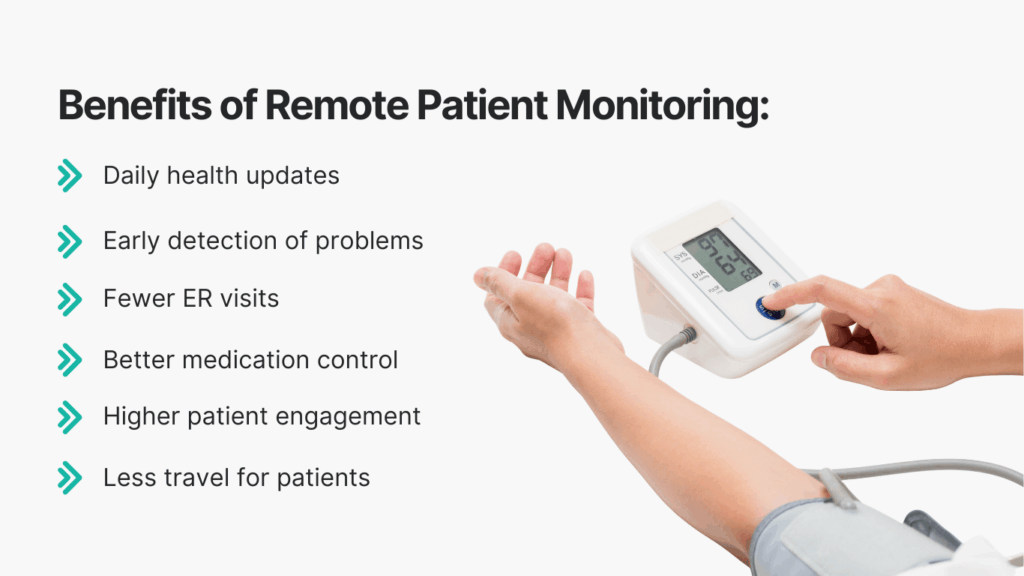
Benefits of Remote Patient Monitoring:
- Daily health updates
- Early detection of problems
- Fewer ER visits
- Better medication control
- Higher patient engagement
- Less travel for patients
RPM is most popular for high-risk conditions like hypertension, where daily readings help catch issues before they become serious. If your clinic manages hypertension patients, CandiHealth makes RPM simple with preconfigured cellular BP devices—no apps, no Wi-Fi, and no setup needed.
What Happens During In-Clinic Visits?
In-clinic visits give doctors a chance to check the patient in person. These visits are important for physical exams, lab tests, and conversations about symptoms that patients may not notice or report on their own. During a typical chronic care visit, a clinician may:
- Check blood pressure, heart rate, or weight
- Review symptoms and changes since the last appointment
- Ask about medication side effects or missed doses
- Perform a physical exam
- Order labs if needed
- Update the care plan
These visits are essential, but they show only one moment in time. A patient’s blood pressure might look fine during the visit, even if it is high or unstable on other days. That’s why many clinics use in-clinic visits together with daily RPM readings to get a full picture.
In-clinic care is still the backbone of chronic disease management, but RPM fills the gaps between appointments.
RPM vs. In-Clinic Visits: Key Differences
Remote Patient Monitoring and in-clinic visits both help manage chronic conditions, but they work in different ways. RPM gives daily updates. In-clinic care gives hands-on exams. When you compare them side by side, it becomes clear where each one fits in long-term care.
Below is a simple comparison table:
| Factor | Remote Patient Monitoring (RPM) | In-Clinic Visits |
| Monitoring Frequency | Daily readings | Only on appointment days |
| Early Detection | Very strong; alerts sent in real time | Limited; issues may go unnoticed for weeks |
| Travel for Patients | No travel needed | Requires travel and wait time |
| Cost Efficiency | Lower long-term cost; fewer ER visits | Higher cost per visit, especially for chronic patients |
| Patient Engagement | High; encourages daily participation | Medium; mostly during visit |
| Medicare Support | RPM has dedicated CPT codes | Covered like standard office visits |
| Best Use Case | Ongoing daily chronic care | Exams, labs, new symptoms, medication changes |
| Limitations | No physical exam | No daily tracking |
PM solves the biggest gap in chronic care—the time between visits. In-clinic visits are still needed for exams, tests, diagnosis, and decisions that require physical evaluation. Clinics see the best results when they use both together.
If your clinic wants to start RPM without complex setup, CandiHealth provides cellular BP devices that work out of the box. No apps. No Wi-Fi. Just daily data straight to your dashboard.
Benefits of RPM for Chronic Care Management
RPM gives clinics a steady flow of patient data. This makes it easier to manage chronic diseases that change from day to day, like hypertension or diabetes. Instead of waiting weeks for the next appointment, doctors can see what is happening in real time.
Below are the biggest advantages of using RPM in chronic care:
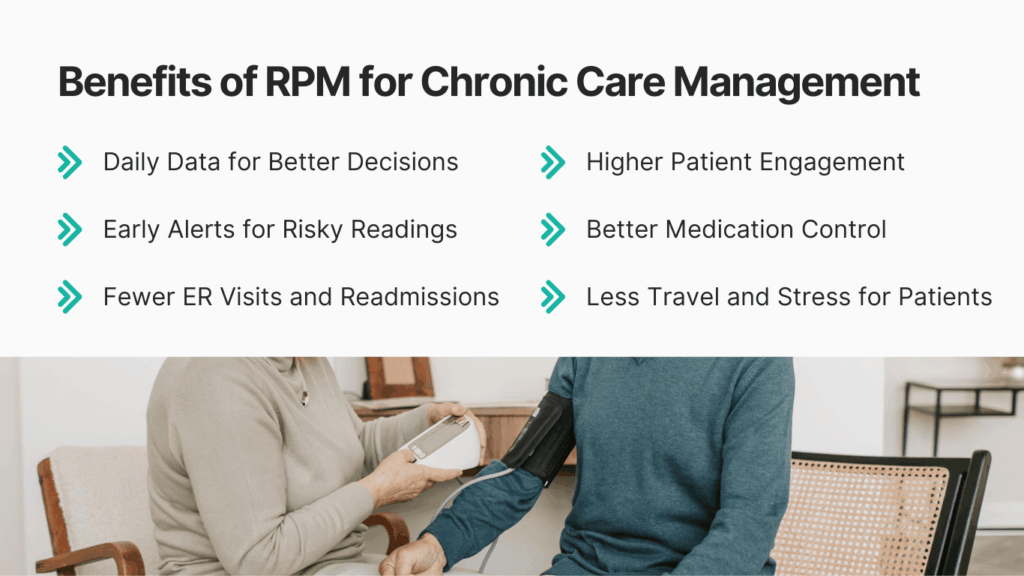
1. Daily Data for Better Decisions
RPM gives doctors fresh data every day. This helps them understand patterns, spot sudden spikes, and guide treatment faster.
2. Early Alerts for Risky Readings
If a patient’s blood pressure or vitals move into a risky range, the clinic gets an alert. Early action can prevent hospital visits and protect patients from serious events.
3. Fewer ER Visits and Readmissions
Studies show that RPM can reduce hospital readmissions by up to 25% for chronic patients (Source: NIH). With closer monitoring, problems are caught sooner.
4. Higher Patient Engagement
Patients who use RPM tend to stay more involved in their care. The simple act of checking vitals makes them more aware of their health and medication routine.
5. Better Medication Control
Daily readings help doctors adjust medications based on trends, not guesses. This leads to steadier blood pressure and better long-term control.
6. Less Travel and Stress for Patients
Patients do not need to wait for appointments to get help. RPM supports them from home, especially useful for seniors and those in rural areas.
CandiHealth supports clinics with cellular blood pressure devices that patients can use right away—no apps, no pairing issues, and no setup. This makes it easier to increase adherence and reduce drop-offs.
Combining Both: The Hybrid Care Model
Most clinics see the best results when they use RPM and in-clinic visits together. RPM takes care of the daily monitoring. Clinic visits handle the exams, tests, and treatment updates. When both are combined, patients get steady support instead of waiting weeks for help.
In a hybrid model, RPM spots problems early, and the clinic visit confirms what needs to change. This reduces guesswork and helps doctors make decisions based on real data, not memory or snapshots.
Example of a Hybrid Workflow:
- The patient checks BP daily with an RPM device.
- The clinic reviews readings each week.
- If a pattern looks unsafe, the doctor schedules a quick visit.
- During the visit, the doctor does an exam and adjusts medication.
- RPM continues tracking to confirm progress.
This model is simple, flexible, and proven to improve control of chronic diseases like hypertension.
Final Recommendation: What Should Clinics Choose?
RPM and in-clinic visits do not replace each other—they work better together. RPM gives clinics daily data, faster alerts, and early action. In-clinic visits provide the physical exams and tests that remote tools cannot cover. When combined, they create a complete and steady care plan for chronic patients.
For conditions like hypertension, this mix is especially powerful. Daily readings help catch issues early, and clinic visits help confirm changes in treatment. This reduces ER visits, improves control, and makes care easier for both the patient and the clinic.
If your clinic wants to improve chronic care, lower risk, and support high-need patients, RPM is a strong addition to your workflow.
Get Started With CandiHealth RPM
If your clinic wants to manage chronic care with less effort and better results, CandiHealth makes RPM simple. We provide preconfigured cellular BP devices that work right out of the box—no apps, no Wi-Fi, and no setup for the patient. Readings go straight to your dashboard every day.
CandiHealth also offers:
- A flat-fee $10 per patient pricing model
- Real-time alerts for high-risk readings
- A clean provider dashboard
- Easy onboarding for clinics and staff
- Fast support when you need it
If you want to improve outcomes, reduce readmissions, and give patients stronger daily support, RPM is the next step. Book a short demo with CandiHealth to see how it works.
Frequently Asked Questions (FAQs)
Is Remote Patient Monitoring as effective as in-clinic visits?
Remote Patient Monitoring is very effective for daily chronic care because it tracks a patient’s health in real time and alerts clinics to risky changes. In-clinic visits are still needed for exams, labs, and treatment updates. The best results come from using both—RPM for daily monitoring and clinic visits for hands-on evaluation.
What types of patients benefit most from RPM?
Patients with long-term conditions like hypertension, diabetes, COPD, and heart failure benefit the most. Seniors, rural patients, and those with mobility challenges also see major improvements.
Does RPM improve treatment outcomes?
Yes. Studies show RPM can lower ER visits, improve medication control, and increase adherence. Daily data helps clinics act early before small issues turn into emergencies.
Is RPM covered by Medicare?
Yes. Medicare has dedicated CPT codes for RPM services, including device setup, data transmission, and monthly monitoring.
Do patients need Wi-Fi or apps for RPM?
With CandiHealth’s cellular BP devices, patients do not need Wi-Fi or a smartphone. The device sends data automatically, which increases compliance.
Related Articles:
How Does Remote Patient Monitoring Work?